
Mohali City Centre Price: How to Evaluate Shop and Showroom Costs
There is no single Mohali City Centre price, and any source quoting one without naming a unit, a floor and a date is guessing. This guide explains the variables that build a commercial quote, how to ask for an official price sheet, and how to convert a headline rate into a total acquisition cost.
Why a single headline price does not exist
When a buyer types "Mohali City Centre price" into a search box, they are hoping for one number. Commercial property does not work that way, and the reason is structural rather than evasive. A residential apartment in a tower is broadly fungible: same layout, same finish, similar view, similar price per square foot across a floor. A commercial unit is the opposite. Its value is created by its position relative to customer flow, and that position is unique to the unit. This is why two shops on the same floor of the same block can be quoted at materially different rates. One faces the main approach and has a wide shopfront; the other sits behind a service core with a narrow entrance. Both may be listed at the same area. Neither buyer nor seller is being unreasonable — the units simply are not the same product. The Mohali City Centre ecosystem compounds this because it is not one building. It spans multiple phases at different stages, from the earlier delivered phases through to ongoing developments such as Mohali City Centre 4, Mohali City Centre Walk and Mohali City Centre Avenue. A rate that applied to one phase at one point in the sales cycle tells you very little about another phase today. So this guide will not invent a figure. It will do something more useful: teach you to read a quote, so that when the sales desk sends you a dated price sheet you can tell whether the unit is fairly priced for what it is.
What actually determines the price of a Mohali City Centre unit?
Eight variables do most of the work. Understanding them lets you interrogate a quote instead of accepting it.
The difference between the quoted price and what you actually pay
The headline rate is the beginning of the calculation, not the end. Build a total acquisition cost before you compare units, and use the same structure for every unit so the comparison is honest.
How to request an official price sheet the right way
A vague enquiry produces a vague answer. A specific enquiry produces a document you can act on. When you contact the sales desk — through the contact page or directly — ask for the following in one message: the phase you are interested in; the format (shop, showroom or booth); the floor; a target area range; and a request for a dated price sheet showing unit numbers, areas with the loading factor stated, applicable premiums, the payment plan and all statutory charges listed separately. Then ask two follow-up questions that most buyers forget. First: what is the date on this sheet and how long is it valid? Second: are there any units in this phase that are not on the sheet, and why? Both questions are ordinary, and the answers tell you a great deal about how the inventory is actually being managed. You can also review the published project information on the Mohali City Centre price list page and the individual project pages for context before your call.
How to sanity-check a quote once you have it
Run three tests. Test one: convert every shortlisted unit to a rate on the same area basis, because a sheet that mixes super area for one unit and built-up area for another is not comparable. Test two: divide the total acquisition cost by the frontage in feet, which gives you a cost-per-running-foot figure that exposes narrow, deep units flattered by their total area. Test three: estimate the monthly rent a plausible tenant could pay for the unit, annualise it, and see what percentage of your total cost that represents — if the implied yield looks far outside anything the local market supports, either your rent assumption or the price is wrong, and it is worth finding out which. None of these tests requires you to know a market price in advance. They are internal consistency checks, and they are how experienced commercial buyers avoid overpaying for area they cannot monetise.
When paying more is the correct decision
Buyers often assume the cheapest unit per square foot is the best value. In commercial property that is frequently false. Paying more is usually defensible when the premium buys frontage, corner exposure, ground-floor position, a clean sightline from the approach road, or proximity to the natural entry path — because each of those directly widens your tenant pool. Paying more is harder to defend when the premium buys additional depth you cannot display in, an upper floor without strong vertical circulation, or a larger area that pushes the monthly rent beyond what local tenants can pay. The practical rule: pay for the attributes a tenant will pay you for. Do not pay for attributes that only appear in the area statement.
Buyer checklist for price evaluation
Take this list into the pricing conversation.
Next steps
Once you understand the price structure, the natural next questions are whether the asset justifies the outlay and how to verify a specific available unit. Continue with the Mohali City Centre investment analysis for the returns framework, the guide to checking a shop that is for sale for unit-level verification, the complete shops buyer guide for format selection, and the step-by-step purchase process when you are ready to transact.
Your questions, answered
What is the current price of a shop at Mohali City Centre?+
There is no single current price, because rates vary by phase, floor, frontage, format and position, and they change over time. Request a dated official price sheet from the STJ Group sales desk for the specific phase and unit you are considering.
Is there a published Mohali City Centre price list?+
Price information is issued by the developer's sales team as a dated sheet for the relevant phase, rather than as a permanent public figure. Ask for the current sheet, its issue date and its validity period.
What is the difference between carpet area, built-up area and super area?+
Carpet area is the usable floor inside the walls; built-up area adds wall thickness and internal features; super area adds a proportionate share of common areas through a loading factor. A rate per square foot is only meaningful once you know which of these it applies to.
Why do two shops of the same size have different prices?+
Because position, frontage, floor, visibility and corner exposure differ. Commercial value comes from a unit's relationship to customer flow, so two units of identical area can have very different earning capacity and therefore very different prices.
What extra charges apply beyond the unit price?+
Typically preferential location or frontage premiums, parking charges where applicable, statutory indirect tax, stamp duty and registration, legal fees, maintenance security at handover, and your own fit-out costs. Ask for each to be itemised separately.
Is the cheapest unit per square foot the best value?+
Often not. A low rate usually reflects weaker frontage, a poorer position or an upper floor. The better test is whether the premium you would pay buys attributes a tenant will pay you for — frontage, visibility, ground-floor access and corner exposure.
How do payment plans affect the effective price?+
A construction-linked plan spreads payments against milestones, while other structures front-load or back-load them. The timing of your outflows changes the real cost of the purchase, especially if you are borrowing. Compare plans on total outflow and timing, not on the headline figure.
Can I negotiate the price of a commercial unit?+
Commercial pricing is generally structured by phase, floor and premium, and how much flexibility exists depends on the inventory position at that moment. The most productive approach is to ask what is achievable on the specific unit rather than assuming a standard discount.
Does a delivered phase cost more than an ongoing one?+
A delivered unit can be inspected and, in some cases, let immediately, and that certainty is typically reflected in its price. An ongoing phase carries timeline exposure, usually reflected in entry pricing and payment structure. Which is better value depends on your risk appetite and holding horizon.
How do I compare a shop price against a showroom price?+
Do not compare them on rate per square foot alone. Compare the total acquisition cost against the realistic tenant pool and achievable rent for each format, since showrooms and shops serve different tenants and carry different liquidity profiles.
You may also like
 Delivered
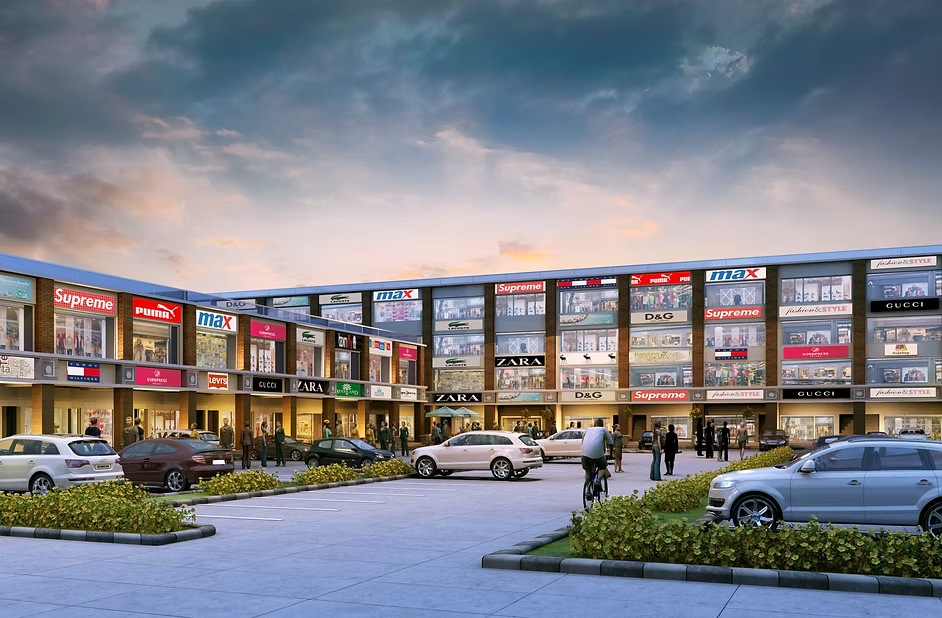
Mohali City Centre 1
Delivered commercial landmark with 100% occupancy on 200 ft Airport Road
ReadyMohali City Centre 2
Ready to move commercial shops & SCOs starting ₹40 Lakhs
 Ongoing
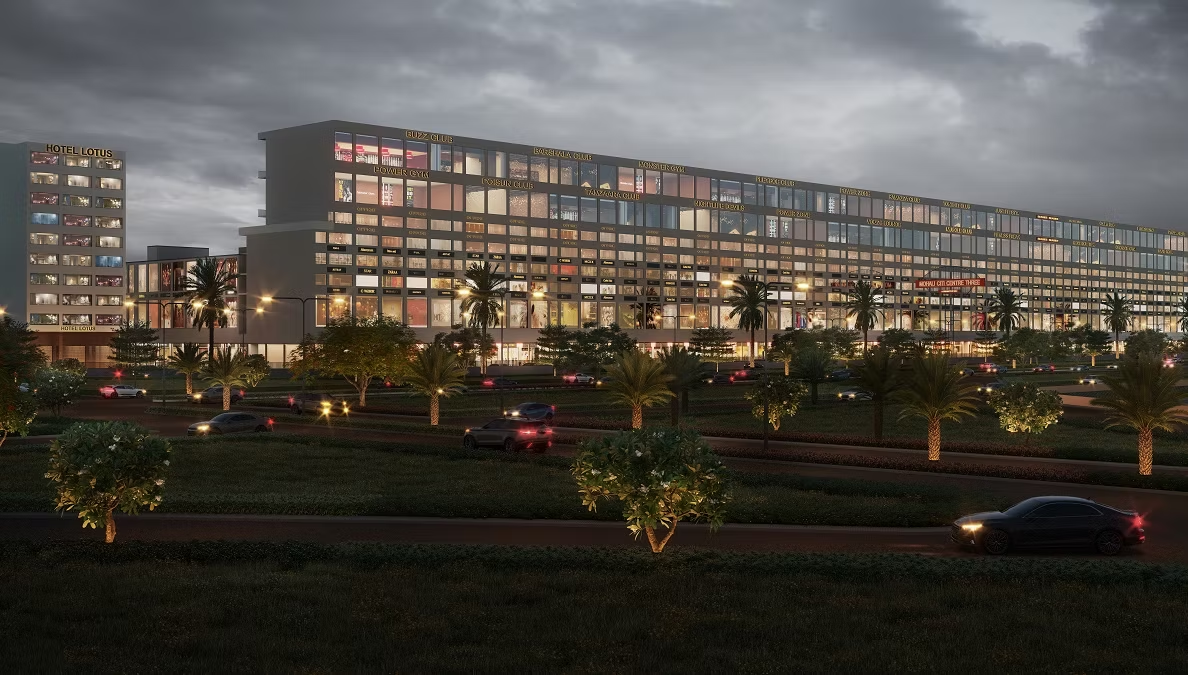
Mohali City Centre 3
Tricity's largest 10-acre commercial market at Airport Roundabout
Talk to our investment desk
Get personalised project recommendations and pricing on WhatsApp. Call +91 97797 99705 or drop us a message.
Disclaimer: Prices, sizes, rental yields, appreciation figures and timelines on this page are indicative market estimates compiled from publicly available corridor data and STJ Group sales records, and are subject to change without notice. They are not an offer, a contract, or a promise of assured or guaranteed returns. Please verify all commercial, legal and RERA details with our team and your own advisors before taking any investment decision.